AI Model Internals · Training Workshop
Transformers, from the inside
Tokens · Attention · Inference — a hands-on field guide, taught by one of the people who wrote the paper.
An engineering training for ML engineers & curious builders · ~90 min
欢迎各位,欢迎!我先说个开场白——你们今天不是来听我念 PPT 的,是来拆开 Transformer 这台机器看它的内脏 的。
我是这篇《Attention Is All You Need》的作者之一。2017 年我们写完它的时候,真没想过它后来会变成整个生成式 AI 的地基。今天我用 90 分钟,带你们把 token、注意力机制、推理这些概念,一个一个掰开揉碎。
不用怕数学,我会用直觉 + 图 讲。中间我会随时停下来问大家。
好,我们从最底层的概念开始——token ,也就是模型到底在吞什么。
Agenda · 14 slides
What we'll cover
01 · Tokens What the model actually reads & the cost of text.
02 · Embeddings & Attention Vectors, Q/K/V, and why "attention is all you need".
03 · Architecture Encoder & decoder blocks, multi-head self-attention.
04 · Inference Autoregressive generation, KV cache, batching, latency.
这是我们今天的 roadmap,四大部分。
先讲 token ——这是最容易被忽略但最重要的一层,因为它直接决定了你的API 账单 和上下文长度 。
然后上核心的注意力机制 ,那是整个模型的灵魂。
接着看整体架构 ,编码器解码器怎么拼。
最后讲推理 ,也就是模型真正跑起来输出的时候,工程上发生了什么。
走到最后你会理解:为什么推理一个 token 一个 token 地蹦 ,为什么有 KV cache,为什么批量请求能省这么多钱。
好,先把第一个问题砸给大家——模型读的是"单词"还是别的?
Module 01 · Tokens
The model doesn't read words —it reads tokens
先记住这句话:模型读的不是单词,是 token 。
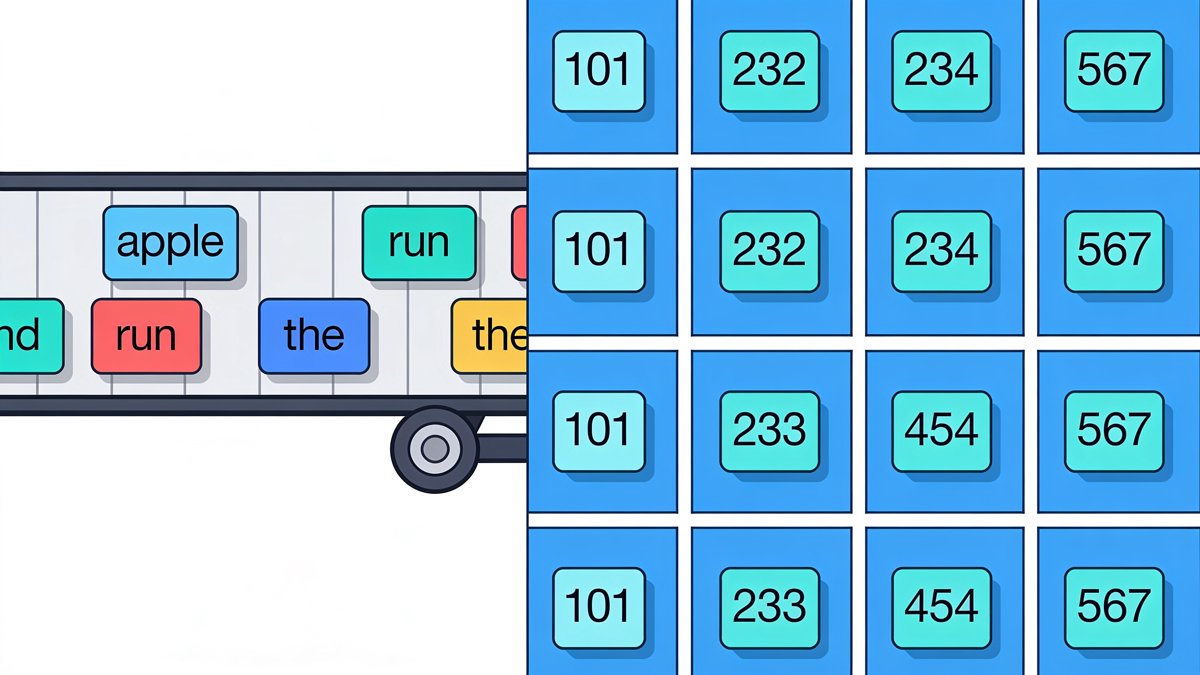
一个 token 大概是英文的 3 到 4 个字符。比如 transformers 这个词,会被切成 tr、ans、form、ers 这样的小块,这叫子词 。
切分用的是 BPE,字节对编码——把出现最多的字符对不断合并,最后凑出一本词汇表 。
为什么这跟你有关?因为你的账单和上下文长度 ,全是用 token 算的,不是用词算的。同一个意思,英文可能 10 个 token,中文可能 8 个。
所以工程师的第一课是:会数 token 。你写给模型的话,输入输出加起来,就是你要付的钱。
好,token 变成了一个个数字 ID,然后呢?我们要把它变成一个向量——这就是embedding 。
Module 02 · Representations
Tokens become vectors
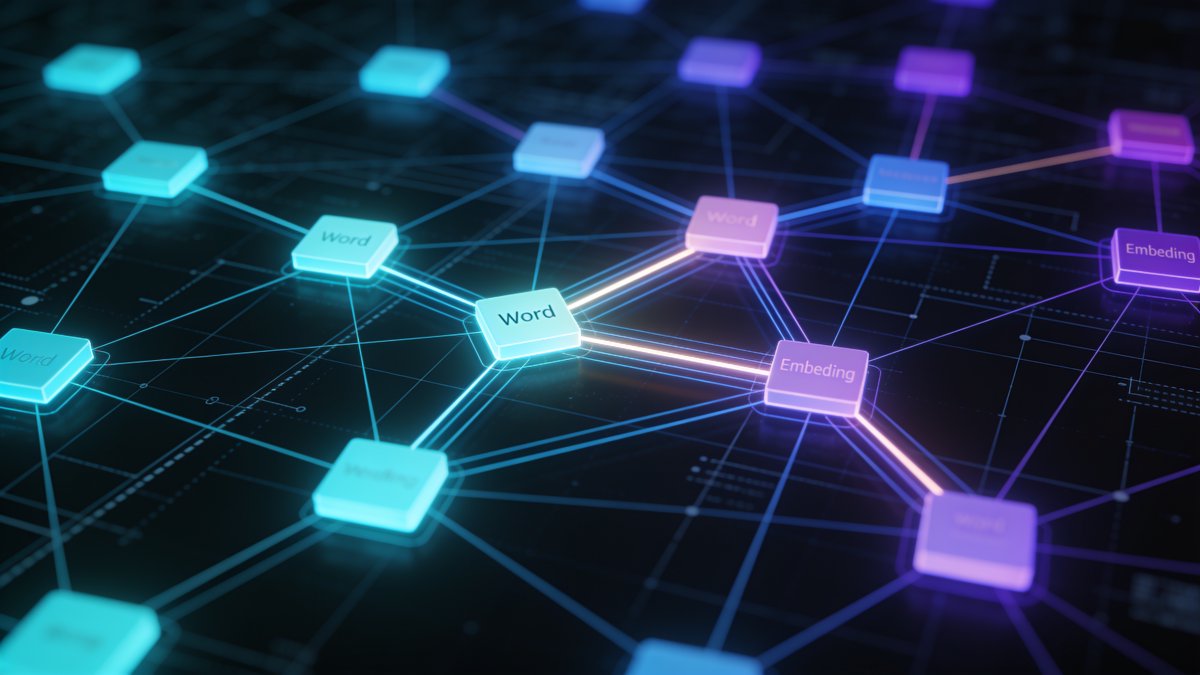
Embedding matrix Each token ID looks up a row in a big matrix → a vector in d_model dims (e.g. 4096).
Meaning as geometry king − man + woman ≈ queen. Directions in vector space encode semantics.
Positional encoding Attention is order-agnostic, so we add sine-wave position signals so the model knows word order.
No hard recurrence or convolution — just lookup tables and position math. That's part of why it parallelizes so well.
现在的关键一跃:每个 token ID 会去一张大表里查它对应的向量 ,这个向量就是 embedding。
维度叫 d_model ,像 4096 维。你可以把它理解成:每个词在高维语义空间里的坐标 。
魔法在于:相近意思的词,坐标也近。国王减男人加女人,约等于女王。这个著名的类比,就是向量几何在起作用。
还有个细节,叫位置编码 。因为注意力本身不关心顺序,所以我们要用正弦波之类的信号,把"这个词排在第几位"也塞进向量里。
注意,这一整层没有任何递归、没有卷积,就是查表和位置计算——所以它特别好并行 ,这也是 Transformer 能跑得快的根本原因之一。
好,向量齐了。下面进入真正的灵魂——注意力机制 。
Module 02 · The core idea
Attention = "how much should I look at everyone else?"
注意力机制一句话概括:我该多关注别人多少 。
具体靠三样东西:Q、K、V。Query 是"我在问什么",Key 是"我是什么",Value 是"我真正要传达的内容"。
计算方式是:把 Query 和每个 Key 做点积 ,得到一个相似度分数,然后用 softmax 把这些分数归一化成权重 ,权重总和是 1。
最后把这些权重,作用到对应的 Value 上,加权求和,就得到当前这个位置"看到别人之后的更新表示"。
所谓 self-attention,就是指序列里每个 token 自己在跟序列里所有 token 对话 ,包括它自己。一次前向,就能让全局信息流动起来。
这也是为什么它叫"attention is all you need"——我们当时觉得,靠这个机制就够强了,不用递归。
接下来看它怎么在架构里落地,怎么多头并行。
Module 02 · Scaling attention
Multi-head attention
h heads in parallel Split the d_model into h subspaces (e.g. 8–32). Each head attends to a different relationship — syntax, coreference, proximity, subject–object.
Concat & project All heads' outputs are concatenated and linearly projected back to d_model.
Think of it as several "attention experts" each monitoring a different type of relationship, then voting together.
多头注意力,就是把注意力切成了好几路并行来做。
我们把 d_model 这个高维空间,切成 h 个子空间 ,比如 8 个、16 个、32 个头。每一头负责"盯"一种关系——有的头管语法,有的管指代,有的管远近搭配,有的管主谓宾。
所以你在论文里看到 MultiHead(Q,K,V),意思就是分头算,最后拼起来 :每一头算完自己的注意力,把所有头的输出拼接,再做一个线性投影回 d_model。
你可以理解成:一帮"注意力专家" 同时上班,各自看一类关系,最后投票汇总。这样模型一次就能同时捕捉多种复杂的依赖。
这是 Transformer 表达能力强的关键之一。好了,机制讲完,咱们把这一整套拼起来看完整架构 。
Module 03 · Architecture
Encoder–Decoder stack
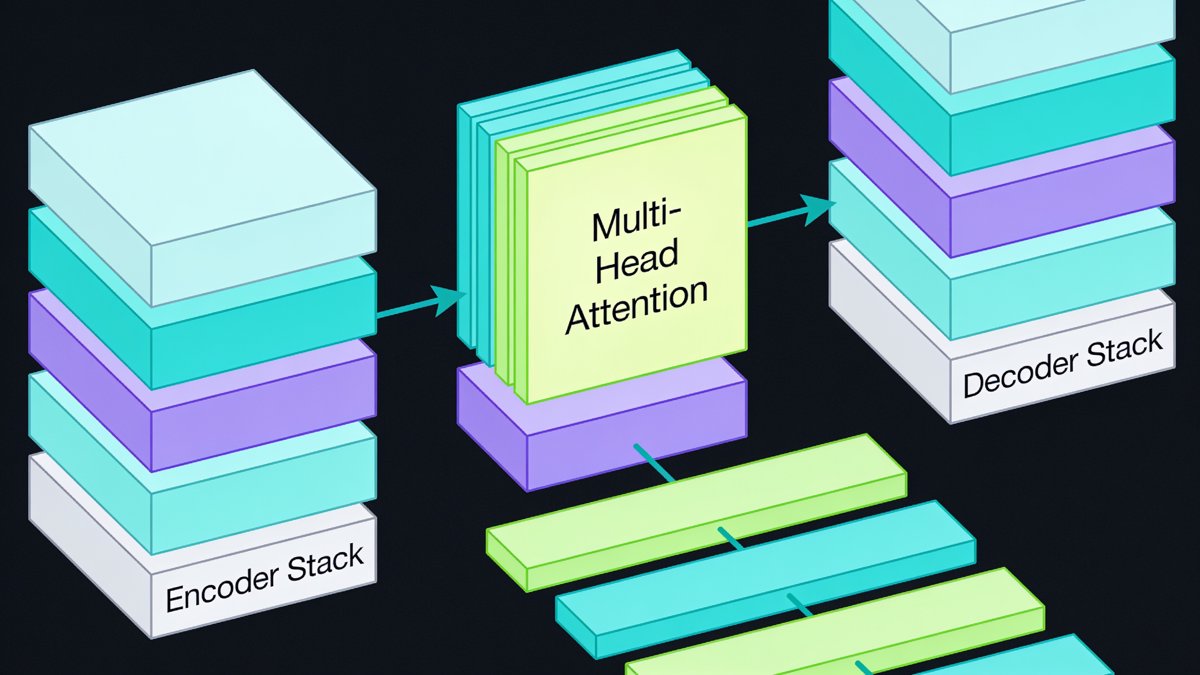
现在看整体拼装。Transformer 是编码器-解码器 两摞叠出来的。
编码器是双向 的自注意力——它一口气把整个输入看完,所以适合理解类任务,像 BERT 就是纯编码器。
解码器有两个关键点:一个是带掩码的自注意力 ,也就是它不能偷看未来,只能看当前位置和之前;另一个是交叉注意力 ,它会去"attend"编码器的输出。GPT 就是纯解码器。
每一层 block 的结构都一样:多头注意力 → 加残差 + 归一化 → 前馈网络 → 加残差 + 归一化 。然后把这样的 block 摞 N 层。
残差连接和层归一化这两个设计,是为了让深层网络好训练 。
架构讲完了。接下来是最实际的部分——模型真的输出的时候,推理 在干什么。
Module 04 · Inference
Generation is autoregressive
推理阶段,模型是一步一个 token 地输出,这叫自回归。
流程很简单:给一串 token,它预测下一个 token ,把这个新 token 拼回去,再预测下一个,一直循环到出现结束符 EOS 为止。
所以有个重要概念叫 time to first token ——第一个 token 的耗时 ,也就是"prefill"阶段,通常是体感最慢的一段。之后是流式输出,一个接一个喷出来,感觉就快了。
这里的关键洞察:输出多长,就要跑多少次前向 。所以"输出越长越慢"不是错觉,是数学上的必然。
那怎么加速这个循环?答案就是下一张要讲的——KV cache 。
Module 04 · Faster inference
KV cache — why it gets faster
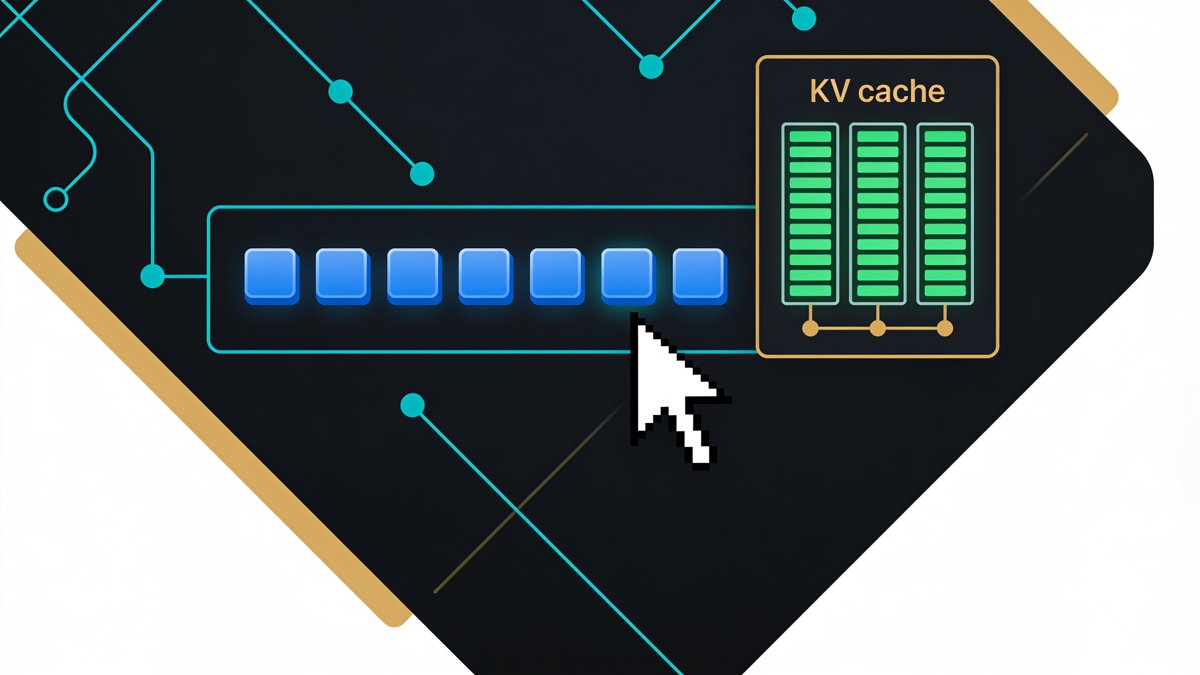
The problem Each step recomputes attention over ALL previous tokens. Naive: O(n²) work total.
The fix Keys & Values from past steps are cached. Only the new Query needs computing → roughly O(n) per step.
Memory cost: KV cache grows with sequence length × layers × heads × head-dim — a big chunk of a model's VRAM during long chats.
KV cache 是推理优化的第一功臣。
问题在于:如果不缓存,每一步都要把前面所有 token 的注意力重新算一遍 ,累加起来是 O(n²),句子越长越爆炸。
KV cache 的思路很简单:过去算好的 Key 和 Value 先存起来 ,新的一步只需要算当前这个 Query,跟缓存里的 K、V 做注意力就行。这样每步成本大概降成 O(n)。
所以你会观察到:模型越聊到后面,每生成一个 token 越快 ——因为缓存越来越足。
但它有代价:KV cache 很占显存 。它的大小 = 序列长度 × 层数 × 头数 × 头维度。长对话时,这一块经常是显存里的大头。
这也是为什么会有 KV cache 量化、page attention 这些省显存的招。好,接下来讲工程上的吞吐——batching 。
Module 04 · Throughput
Batching = many requests, one pass
Batch inference Group N requests and run them as one matrix multiply → far higher GPU utilization.
The tradeoff More throughput per token, but every request waits for the slowest in the batch → higher latency.
Continuous batching Modern servers evict finished sequences and slot new ones in mid-step — key to fast chat.
批量推理,是提高吞吐的利器。
原理:GPU 最擅长的是大矩阵乘法 。把 N 个请求塞进一个 batch,一起做一次前向,就能把 GPU 的算力喂得更满,每个 token 的平均成本大幅下降 。
但天下没有免费的午餐:延迟会变高 。因为整个 batch 要等最慢的那一个完成,才能一起推进。
所以现代推理服务器用了连续批处理 ——谁生成完了就踢出去,新请求马上补进来,不用等整个 batch 一起结束。这也是为什么大厂聊天服务响应那么快。
所以工程上都在吞吐和延迟之间做平衡 。你设的 batch size、并发数,都是在调这个天平。
好,下面我们看看怎么把延迟真正压下来——量化 和推测解码 。
Module 04 · Memory & speed
Quantization: fewer bits, faster
FP16 baseline A 7B-parameter model in FP16 ≈ 14 GB of weights.
4-bit (INT4) Weights dropped to 4 bits ≈ 3.5 GB — ~4× smaller, runs on a single consumer GPU, small quality hit.
Post-training quantization rounds weights to fewer bits. Bigger speed & memory win for a small accuracy cost.
量化,就是用更少的比特存权重 ,换速度和显存。
举个例子:一个 70 亿参数、也就是 7B 的模型,用 FP16 存,权重大概要 14 GB 。
如果压到 4 位 INT,大概只要 3.5 GB ,小了差不多四倍。很多本地跑的模型就是这么塞进你显卡里的。
代价是有一点精度损失,但对大多数任务来说,4 位量化基本感知不到 。
所以你会看到 GGUF、GPTQ、AWQ 这些词,本质上都是在做"量化到多少位"的取舍。
这也是为什么"同样的模型,人家能跑,你的显卡跑不动"——很可能就是量化位数不同。好,最后一个加速技巧——推测解码 。
Module 04 · Advanced speed
Speculative decoding: guess, then verify
Draft A small fast model guesses the next K tokens in one shot.
Verify The big model checks all K at once in a single parallel pass.
Accept / reject Accepted guesses are free; on a miss, resample. Net: ~2–3× decode speed-up.
推测解码,是个很聪明的"先猜再验证"的招。
思路:让一个小模型先猜 接下来几个 token,一次性猜 K 个。
然后让大模型一次性并行验证 这 K 个。因为大模型算一整批比算一个一个快得多。
猜对了的,一分钱不花直接收下;猜错了的,重新采样。大部分时候小模型猜得挺准,所以能白嫖几倍的加速。
常见的加速倍数大概是2 到 3 倍 的解码速度提升,还不损失质量。
这是前沿推理优化的方向之一。好,理论讲完了,下一张我们把整条链路串起来 总结一遍。
Recap
The whole chain, one slide
Text → input Tokenizer → token IDs → embeddings + position Understanding Stacked blocks: multi-head self-attention + MLP + add & norm Output Autoregressive next-token loop until <EOS> Speed KV cache (O(n) per step) + batching (throughput) + quantization (memory) + speculative (latency) The mantra Attention is all you need.
我们把整条链路串一遍。
输入 :文本先进分词器,变成 token ID,再查表变成 embedding 加位置编码。
理解 :一摞 block,每个 block 就是多头自注意力加前馈网络,配合残差和归一化。
输出 :自回归,一个 token 一个 token 地预测,直到结束符。
加速 :KV cache 省重复计算,batching 提高吞吐,量化省显存,推测解码降延迟。
最后回到那句话——attention is all you need 。这就是我们今天全部的骨架。
接下来给大家布置一个小作业,让今天的知识落地。
Wrap-up · Hands-on challenge
Go count some tokens. Homework: pick a model, measure its KV cache for a 4K-token conversation, and rough out its FP16 vs INT4 memory — then bring the numbers and we'll compare.
← → navigate · S presenter · T themes · F fullscreen
今天的作业很简单,也很好玩。
第一 ,挑一个模型,算一下一次 4000 token 的对话,KV cache 大概占多少显存 。
第二 ,把这个模型在 FP16 和 INT4 下的权重内存 各估一遍。
把数字带回来,我们下次开场 5 分钟,一起核对谁算得对、谁算得出乎意料。
记住,理解这些不是为了考试,是为了让你在真实工程里会算账、会选型、会优化 。
我是这篇论文的作者之一,谢谢你们来听。有问题随时找我。我们下次见!